Obsession and ontological vertigo: my thoughts on All Fours by Miranda July

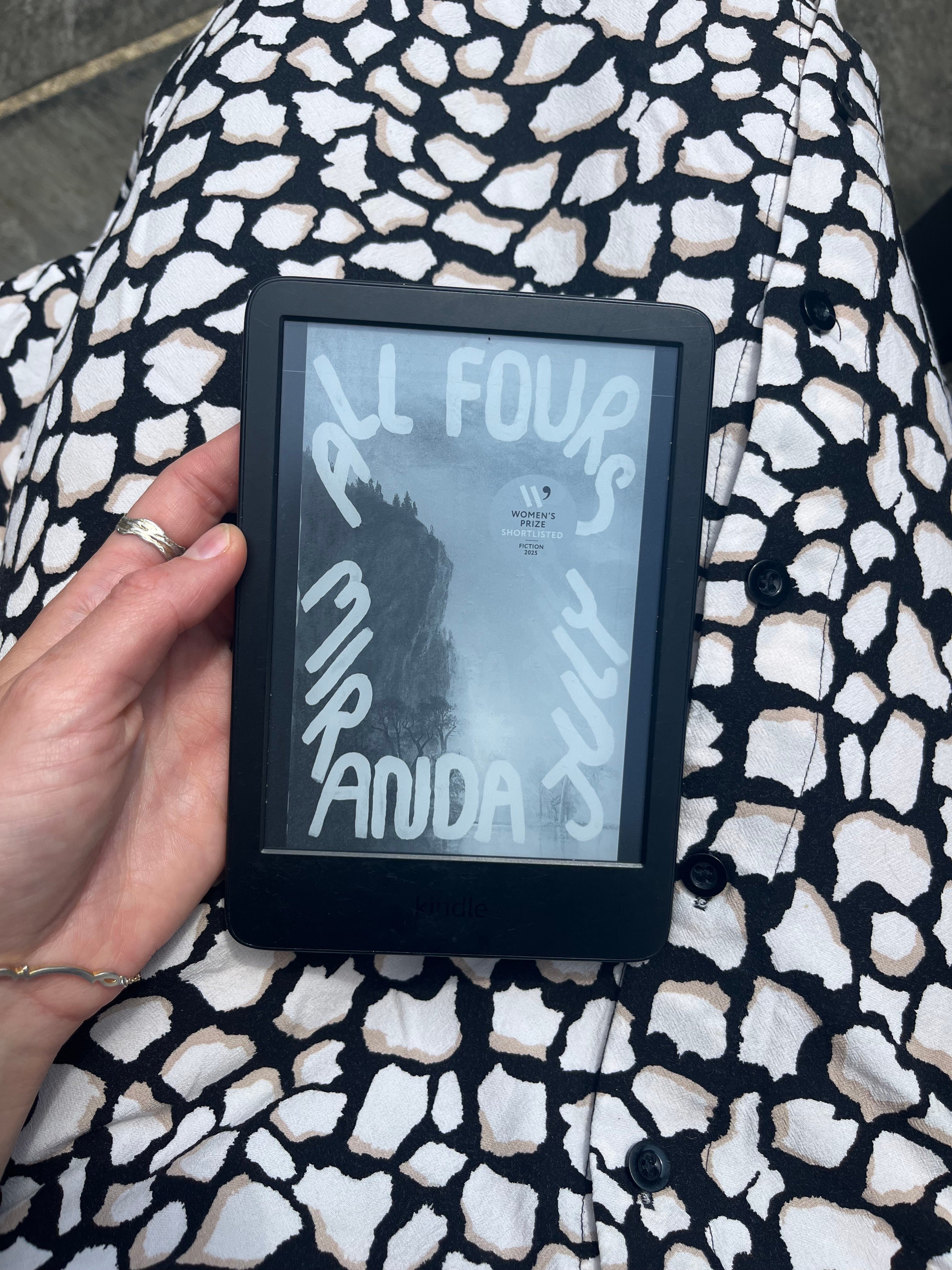
Reading All Fours left me asking, with both awe and alarm: what the actual fuck am I reading? Attempting to summarise the plot aloud, "it's about a 45-year-old woman who leaves her husband and child to drive across America, only to stop a few hours in, book into a motel, and re-decorate the room before embarking on a string of social and sexual transgressions", felt like a performance in itself. Miranda July has written something profoundly strange, sometimes discomforting, and undeniably brilliant.
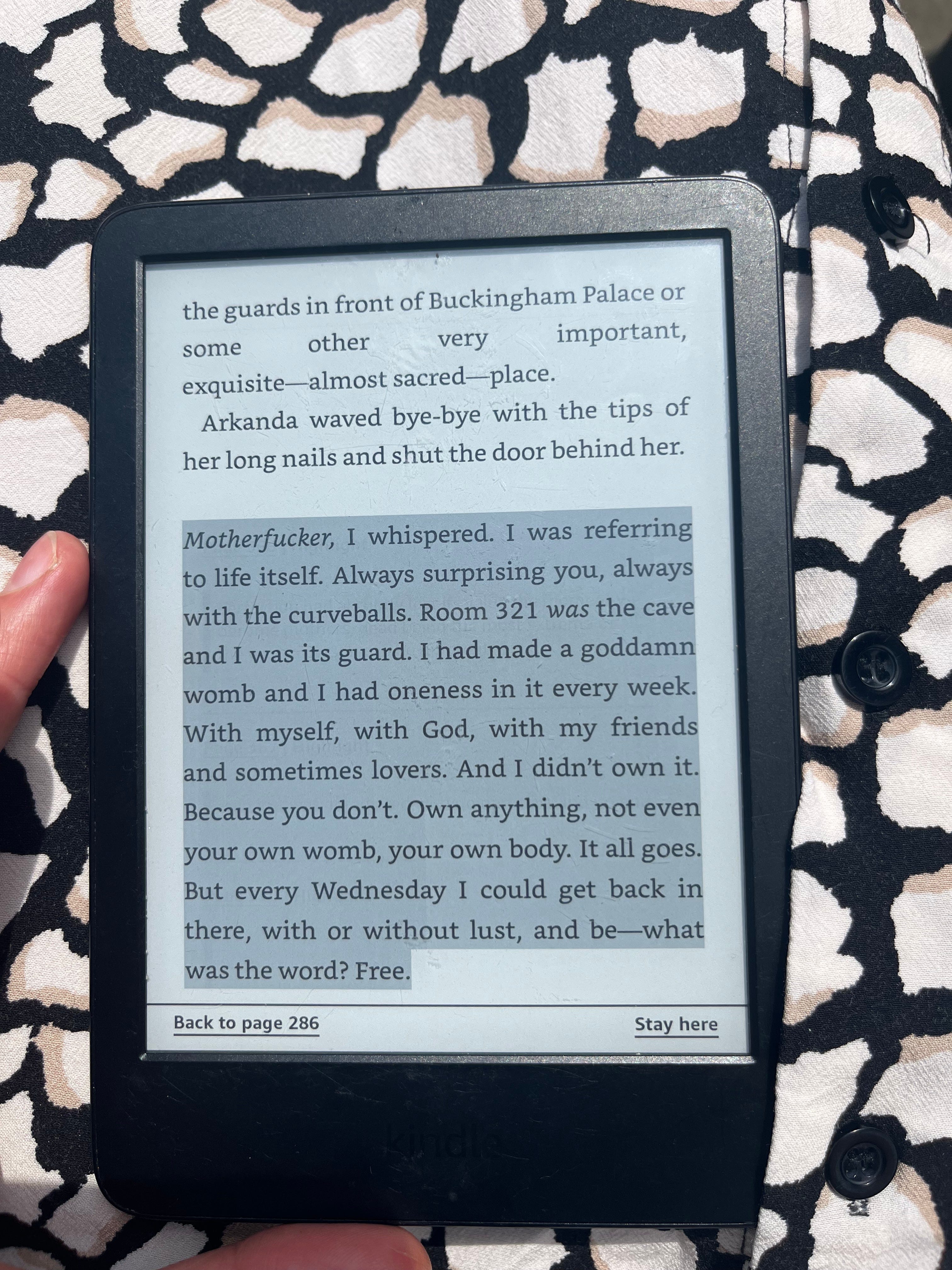
There were moments that made me want to wash my eyes out with soap. But there were also passages that I had to reread, not for clarity, but for admiration. This is a novel saturated with wit, provocation, and vulnerability. There’s so much to unpack, and July doesn’t hand anything over easily: the unease is precisely the point.
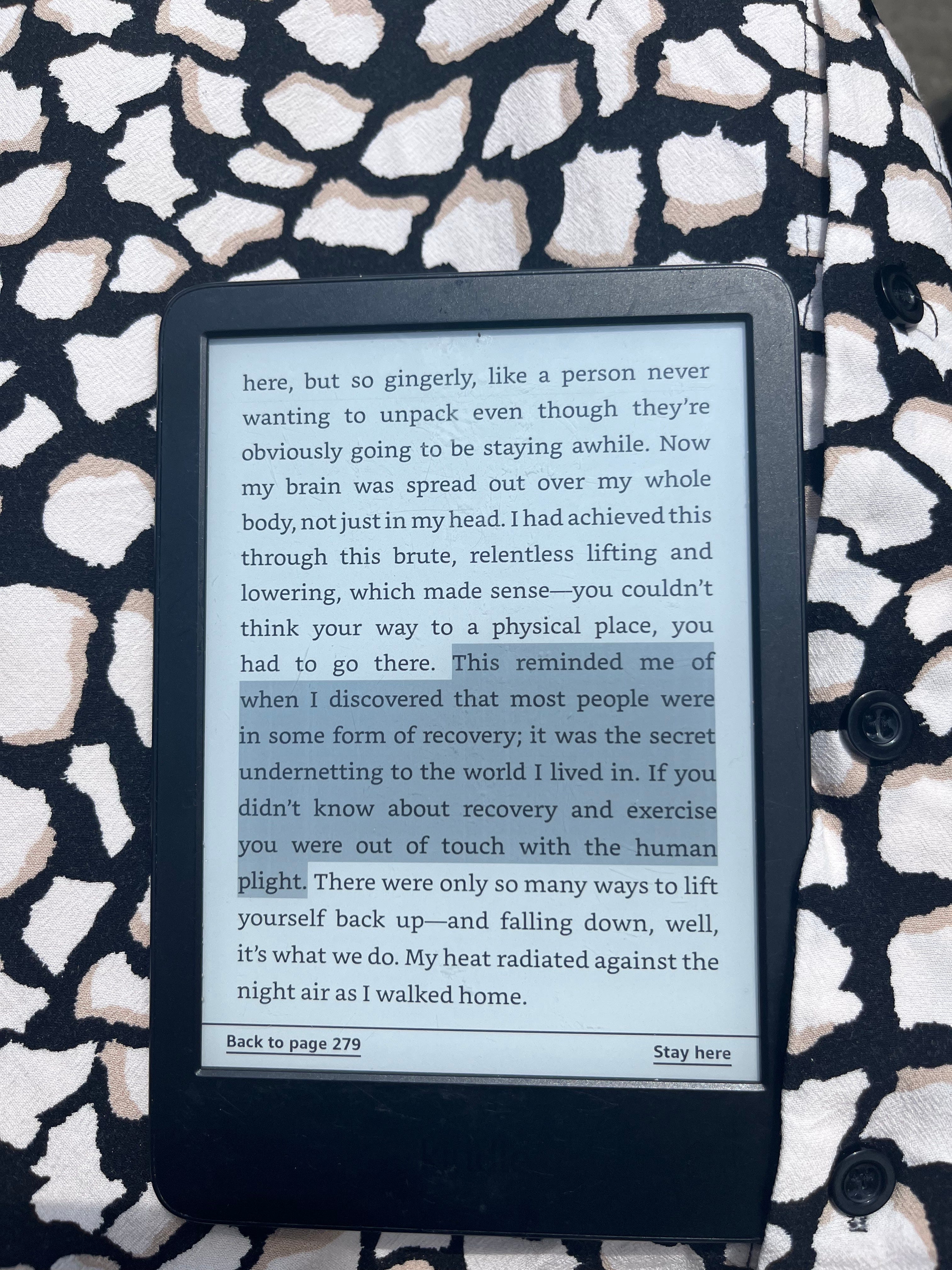
Reading it from my Zamalek balcony on a Friday, the adhan in the background, glimpses of men in galabeyas and women veiled on their way to Jummah - this felt like an absurd juxtaposition. But it also felt like the perfect place to reflect on what this book is really asking: what do we do with desire when we’re told it no longer belongs to us?
At its core, All Fours is a meditation on female agency in midlife. To me, July’s protagonist, like a fable or an archetype, embodies what happens when a woman unlearns submission to the invisible structures of age, marriage, motherhood, and social legibility. The weirdness, the eroticism, the moral ambiguity: it all serves to remind us that free will doesn’t vanish with time, it just gets harder to claim.
I’ve seen reviews positioning this novel as canonical, and I can kind of see why. It’s not just the eccentric brilliance of July’s prose; it’s also the questions she provokes around performance, intimacy, gender, and ageing.
As I’ve mentioned, All Fours is by no means an easy read. It’s deliberately erratic - and fragmented yet that’s precisely the point. The novel offers an intimate, unfiltered glimpse into the protagonist’s mind, one where fantasy and reality bleed into one another. The narrative constantly shifts between what she is imagining, what she is truly experiencing - living and perhaps more crucially what she envisions or wants to be her reality. This creates a kind of ontological vertigo, a deliberate blurring of perception that mirrors the protagonist’s own unraveling.
The notion of transgression lies at the heart of this novel - not just in the obvious sense (adultery, dishonesty, sexual rebellion), but in its more subtle, co-stitched trespasses: between daydream and lived experience, between vitality and decay, between life and the looming spectre of death. The protagonist repeatedly asks: what does it really mean to live?
Death is a quiet but persistent presence. We learn that her child was born prematurely and she spent harrowing weeks in the NICU, an ordeal that bound her and her husband together in a strange, almost “ecstatic” unity. We also learn that both her grandmother and aunt died by suicide in their fifties, a decade she now approaches with uneasy anticipation.
These flirtations with mortality haunt her psyche, especially as she begins to experience the symptoms of menopause. A doctor casually informs her that her libido will decrease, her moods may change, that her very self might shift. Confronted with this biomedical prophecy, she begins to spiral.
What does it mean to grow older as a woman in a culture that links femininity so tightly to youth, sexuality, and emotional equilibrium? What happens to desire when the body is deemed past its prime?
In response, the novel becomes a kaleidoscope of transgressions. Through these messy acts, she is not just rebelling but grasping for sensation, for consciousness, for proof that she is still here.